

FromNovember 6 to 8, 2026, the 6th International Conference on Smart Transportation and City Engineering (STCE 2026) was successfully held inNanjing, China. The conference was hosted by Nanjing Tech University, organized by theCollege of Transportation Engineering, Nanjing Tech University, and supported by theFaculty of Transport and Aviation Engineering, Silesian University of Technology(Poland). In addition, thePoland Online Sessionwas live-streamed via Zoom on November 5, 2026, allowing international scholars who were unable to travel to Nanjing to participate online. Centering on frontier topics in smart transportation and city engineering — including innovative applications of intelligent transportation systems, big data and the Internet of Things in cities, green mobility solutions, and the role of artificial intelligence in traffic dispatching and planning — the conference brought together experts, scholars, engineering professionals, and young researchers from universities, research institutes, and industry, both on-site and online.
Opening Ceremony
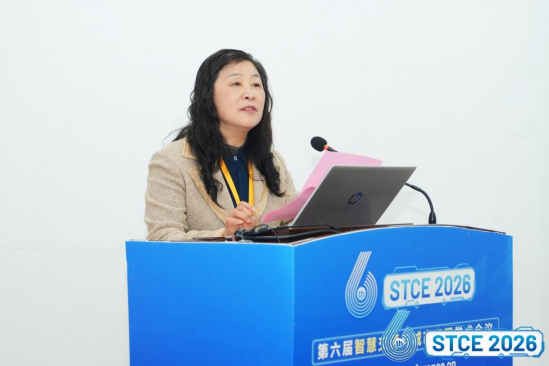
At the opening ceremony, Prof. Cuimei Xu, Party Committee Secretary of the College of Transportation Engineering, Nanjing Tech University, delivered the opening address. She extended a warm welcome and sincere gratitude to the experts, scholars, and young representatives in attendance, and noted that the conference had built an open and shared academic exchange platform for smart transportation, city engineering, and related interdisciplinary fields. She expressed her hope that participants would fully exchange the latest research achievements and jointly promote the integrated development of intelligent transportation technology innovation and urban engineering practice. After the ceremony, all participants took a group photo.
Keynote Speeches: Transport AI, Large Models, and Smart Railway Maintenance
Four distinguished experts were invited to deliver keynote speeches at the main venue:

Spanning low-altitude transportation and autonomous transport equipment, traffic reasoning large models, AI-driven paradigms for transportation research, and smart railway maintenance practice in western China, the four keynotes covered the key theme of artificial intelligence empowering transportation systems and the intelligent operation and maintenance of major infrastructure. The speeches presented the latest progress in integrating large models, embodied intelligence, and other AI technologies with transportation, while also responding to the practical needs of constructing and operating major national transportation infrastructure, sparking lively on-site discussion.
Invited and Oral Presentations: Young Scholars Showcase Diverse Research
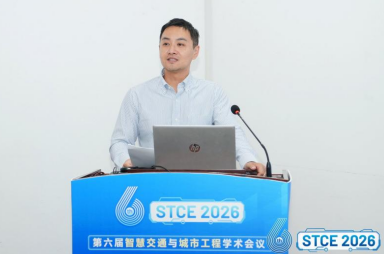
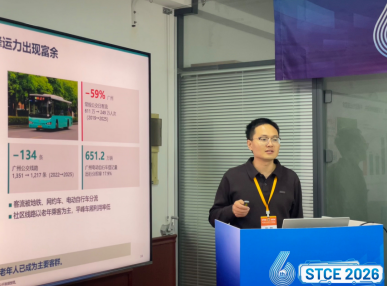
In the afternoon of November 7, two parallel sessions were held — the “Intelligent Transportation Technology and Application” Session and the “Transportation Infrastructure and Transportation Planning, Management” Session. Prof. Duo Li (Huazhong University of Science and Technology) and Asst. Researcher Kai Zhang (Shenzhen Research Institute, The Hong Kong Polytechnic University) delivered invited speeches on frontier topics including generative self-supervised learning for cyberattack-resilient EV charging demand forecasting, and ALNS-based route and frequency optimization for elderly-oriented passenger–freight sharing microcirculation buses. Young scholars from Shenzhen University, the China Academy of Transportation Sciences, Beijing Institute of Petrochemical Technology, Nanjing Vocational University of Industry Technology, CCCC Second Harbour Engineering Co., Ltd., Sichuan University, and the Civil Aviation University of China presented oral reports on topics such as intelligent transportation perception, multi-agent-vehicle formation path planning, ultra-deep-water construction in complex sea conditions, dynamic delivery planning, and the organization of airport transfer spaces. Combining theoretical analysis, experiments, numerical simulation, and engineering applications, the presentations stimulated heated discussion on-site.

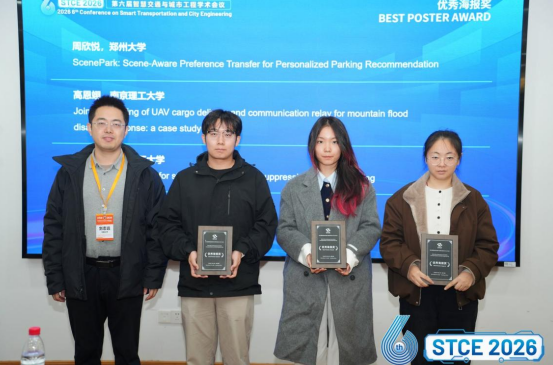
During the conference, awards for Best Paper, Best Poster, and Best Oral Presentation were presented, encouraging young researchers and graduate students to showcase innovative achievements, improve their academic communication skills, and deepen exchanges across institutions and research directions.
Poland Online Session: A China–Europe Online Academic Bridge
To connect participants who could not travel to Nanjing, STCE 2026 set up a dedicatedPoland Online Session, live-streamed via Zoom onNovember 5, 2026, 08:00–10:00 (Poland Time, UTC+1 / 15:00–17:00 Beijing Time). The session was chaired byAssoc. Prof. Katarzyna Turońof the Faculty of Transport and Aviation Engineering, Silesian University of Technology — the conference’s co-organizer — who delivered the opening and welcome remarks and moderated the online discussion.
| Time (Poland, UTC+1) | Session | Speaker / Content |
|---|---|---|
| 08:00–08:05 | Opening & Welcome | Opening remarks by the Session Chair, introducing STCE 2026 and the online session arrangement |
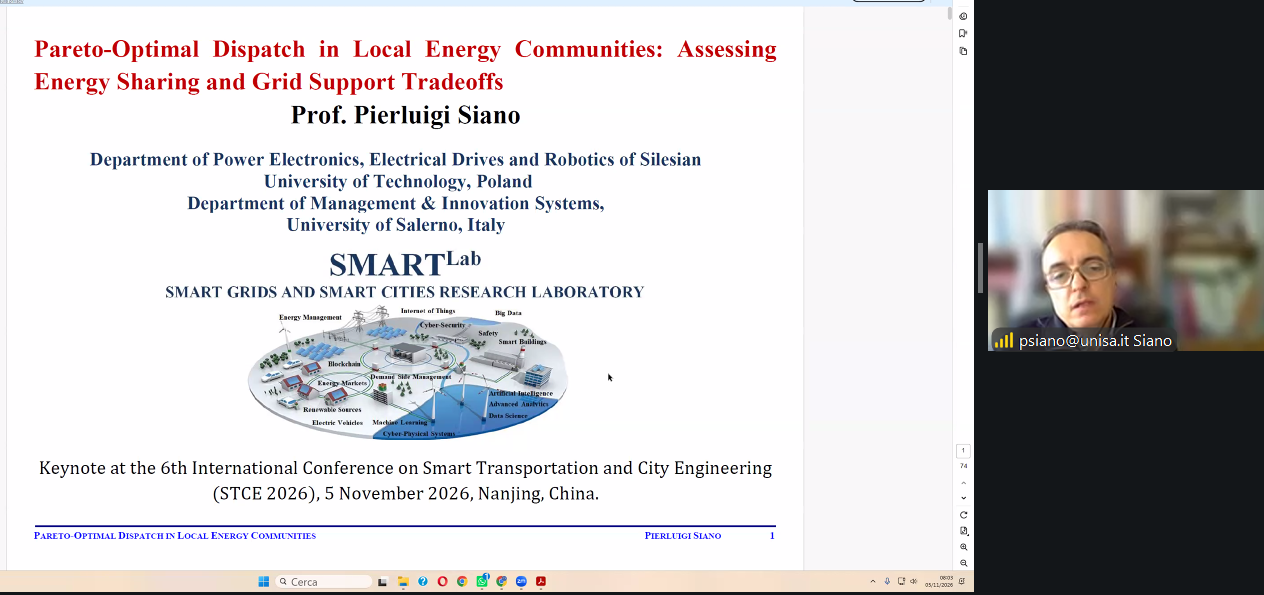
| 08:05–08:35 | Keynote 1 | Prof. Pierluigi Siano(University of Salerno, Italy) “Pareto-Optimal Dispatch in Local Energy Communities: Assessing Energy Sharing and Grid Support Tradeoffs” |
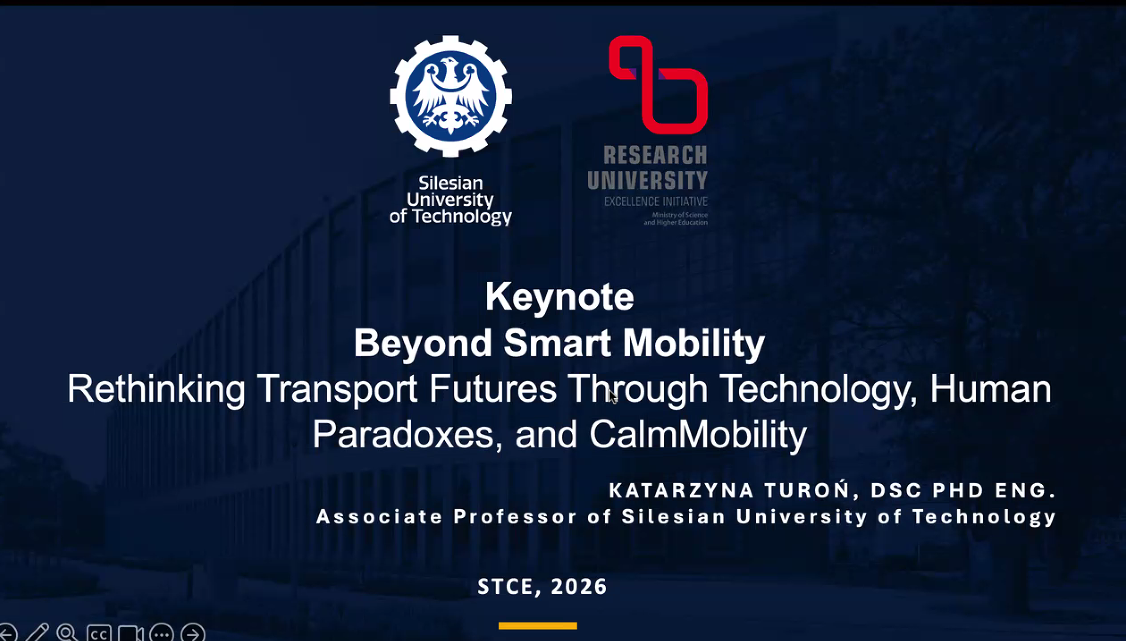
| 08:35–09:05 | Keynote 2 | Assoc. Prof. Katarzyna Turoń(Silesian University of Technology, Poland) “Beyond Smart Mobility: Rethinking Transport Futures Through Technology, Human Paradoxes, and CalmMobility” |
| 09:05–09:35 | Keynote 3 | Assoc. Prof. Ir. Dr. Norrima Mokhtar(Universiti Malaya, Malaysia) “Beyond Smart Mobility: Reimagining Cities Around People” |
| 09:35–10:00 | Q&A & Closing | Online Q&A and closing remarks |
The three online keynotes addressed the Pareto-optimal dispatch of local energy communities and the trade-offs between energy sharing and grid support, future transport systems viewed through the lens of technology, human factors, and “calm mobility,” and human-centered approaches to reimagining cities around people. The session concluded with a lively online Q&A, in which participants exchanged views on smart grids and smart mobility, sustainable mobility management, trasport digitalization, and AI-enabled urban sensing, further strengthening the academic ties between STCE and its European and international partners.



Looking Ahead: The Conference Ends, the Exchange Continues
The successful staging of STCE 2026 provided a high-quality exchange platform for experts and scholars in smart transportation and city engineering, both on-site in Nanjing and online through the Poland session. Participants noted that the conference program closely matched industry needs in AI-empowered transportation, green and low-carbon mobility, and the intelligent operation and maintenance of infrastructure, broadening academic horizons and fostering cross-disciplinary, cross-institutional, and cross-regional dialogue. In the future, the STCE conference series will continue to serve as an academic platform, supporting technological innovation, talent cultivation, and engineering practice in smart transportation and city engineering, and further deepening China–Europe and international cooperation.